
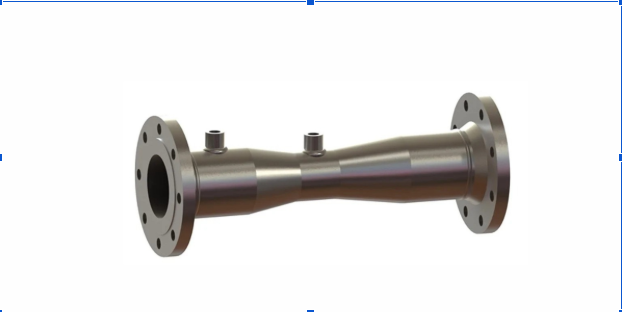

Accurate flow measurement is fundamental to process control, safety, and efficiency in industrial systems. Among the various flow measurement technologies available, the Venturi flow meter has maintained its position as one of the most reliable and cost-effective options for a remarkably wide range of applications. Understanding how this device works, where it performs best, and what advantages it offers over alternative technologies helps engineers and specifiers make better decisions when selecting flow measurement equipment for demanding industrial environments.
The Operating Principle of a Venturi Meter
The venturi meter operates on the principle of differential pressure measurement. It consists of a converging section that reduces the pipe diameter to a narrow throat, followed by a diverging section that returns the flow to the original pipe diameter. As the fluid passes through the constricted throat, its velocity increases and its pressure drops, a relationship described by Bernoulli’s theorem.
By measuring the pressure difference between the upstream section and the throat, the volumetric flow rate can be calculated with a high degree of accuracy. This fundamental relationship between pressure differential and flow rate is mathematically well-defined, making the Venturi flow meter one of the most theoretically consistent flow measurement devices available.
Why the Venturi Meter Is a Preferred Choice in Industrial Applications
The orifice flow meter is the most commonly used differential pressure flow device, but the Venturi flow meter offers several advantages in specific applications that make it worth specifying over the simpler orifice plate.
| Parameter | Venturi Meter | Orifice Flow Meter |
| Permanent pressure loss | Low- typically 10–15% of differential | High- 40–60% of differential |
| Accuracy | High- typically ±0.5–1% | Moderate- typically ±0.5–1.5% |
| Turndown ratio | Moderate- typically 3:1 to 4:1 | Moderate- typically 3:1 to 4:1 |
| Maintenance requirement | Low- no moving parts, no sharp edges to wear | Higher- orifice plate requires periodic inspection |
| Cost | Higher initial cost | Lower initial cost |
For applications where energy efficiency is important, and where the permanent pressure loss of an orifice plate would translate into significant pump or compressor power costs over the life of the installation, the Venturi Flow Meter’s lower permanent pressure loss typically justifies its higher initial cost relatively quickly.
Applications Where Venturi Meters Excel
Liquid Flow Measurement in Large Diameter Pipelines
In large diameter pipelines carrying water, hydrocarbons, or process liquids, the energy saving associated with the Venturi Flow Meter’s low permanent pressure loss is substantial. Municipal water supply systems, water injection lines in oil field operations, and large cooling water circuits are all common applications.
Steam Flow Measurement
Steam flow measurement presents challenges for many flow devices, but the Venturi Flow Meter handles steam well because of its smooth internal profile with no sharp edges that could erode under high-velocity steam flow. The absence of moving parts is particularly valuable in steam applications where mechanical wear would otherwise be a maintenance concern.
Slurry and Dirty Fluid Applications
Devices with sharp edges, small orifices, or internal moving parts struggle with slurries and particle-laden fluids. The Venturi flow meter’s smooth, gradually tapered profile is far more tolerant of entrained solids than an orifice flow meter, making it a better choice for applications involving mining process slurries or produced water with suspended solids.
Installation Requirements for Accurate Measurement
The accuracy of a Venturi flow meter depends significantly on correct installation. The key installation requirements are:
- Upstream straight pipe run: typically 10 to 30 pipe diameters of straight unobstructed pipe upstream of the meter, depending on the upstream fittings
- Downstream straight pipe run: typically 5 pipe diameters minimum downstream of the throat
- Pressure tapping quality: flush, burr-free pressure tappings that do not disturb the flow profile at the measurement point
- Correct orientation: horizontal installation is standard for liquid applications; vertical downward flow should be avoided for liquids with entrained gas
Calibration and Long-Term Performance
One of the significant advantages of the Venturi flow meter is its long-term stability. With no moving parts and no internal components subject to wear, a properly installed Venturi flow meter maintains its calibration accuracy over many years without intervention. This is a significant advantage in applications where regular calibration would be difficult, costly, or would require process shutdown.
The smooth internal profile is also inherently more resistant to fouling than devices with crevices or small openings, further supporting long-term measurement stability.
Selecting the Right Venturi Meter for a Specific Application
Selection parameters that need to be confirmed before specifying a Venturi Flow Meter include:
- Pipe nominal bore and schedule
- Maximum and minimum flow rate (for turndown assessment)
- Process fluid properties, density, viscosity, temperature, and pressure
- Whether the fluid contains entrained solids or gas or is a two-phase mixture
- Material requirements based on fluid corrosivity
- Required measurement accuracy
Conclusion
The Venturi Flow Meter remains one of the most reliable, accurate, and maintenance-friendly flow measurement devices available for industrial applications. Its low permanent pressure loss, compatibility with a wide range of fluids, and long-term calibration stability make it the preferred choice in many demanding process environments. NND Oil & Gas supplies Venturi Flow Meters and a comprehensive range of flow measurement equipment for oil and gas, water treatment, and process industry applications, providing engineering support to ensure correct selection and installation every time.