
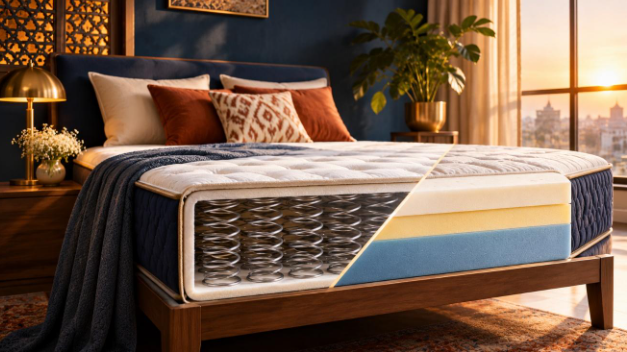

Choosing between a spring mattress and a foam mattress isn’t always a simple decision. One has a traditional coil-based construction with a bouncy feel, while the other uses layers of foam to provide cushioning and adapt to your body. But these differences go beyond how a mattress feels when you first lie down.
Factors such as pressure relief, motion isolation, heat retention and long-term support can influence your experience over the years. Before making a purchase, it helps to understand how each type performs in everyday use. Let’s look at their key differences to help you find a mattress that meets your comfort and support needs.
Spring Mattress vs Foam Mattress: The Basics
A spring mattress relies on a network of steel coils to create bounce and support your body as you move. A foam mattress, on the other hand, uses layers of foam that gently mould around your body’s shape.
Both approaches will give you comfortable, supportive sleep, but they go about it in very different ways. Let’s break down how each one actually works underneath the surface.
How Does a Pocket Spring Mattress Work?
A pocket spring mattress contains individual steel coils, each enclosed in a separate fabric pocket. These springs move independently, allowing the mattress to respond to different areas of your body and provide targeted support.
This independent movement also helps reduce motion transfer. When one person changes sleeping positions or gets out of bed, the movement is less likely to disturb their partner.
The spaces between the coils allow air to circulate through the mattress, helping manage heat buildup. Pocket spring mattresses also provide a responsive, bouncy feel, making it easier to change sleeping positions throughout the night.
How a Foam Mattress Supports Your Body?
A foam mattress works by letting its layers slowly mould to the curves of your body. This helps spread your weight evenly and can ease pressure around the shoulders, hips, and lower back, especially useful if you tend to toss and turn.
One of the biggest draws of foam is its ability to isolate motion. If you share your bed, movement on one side is far less likely to wake the person on the other side, which is a genuine plus point for couples.
That said, foam retains more body heat than spring options. In warmer parts of India, this can make a real difference to how cool and comfortable you feel through the night.
Spring vs Foam: A Quick Side-by-Side Comparison
| Criteria | Spring Mattress | Foam Mattress |
| Feel | Bouncy, responsive | Soft, body-hugging |
| Support | Strong, even support with good edge strength | Contours closely to body shape |
| Cooling & airflow | Better airflow, stays cooler | Can retain more heat |
| Motion isolation | Good; individually wrapped pocket springs help reduce motion transfer | Excellent; minimal partner disturbance |
| Durability | Long-lasting with quality coils | Long-lasting if high-density foam is used |
| Maintenance | Occasional rotation recommended | Minimal, but needs good ventilation |
| Price range | Budget to premium options available | Budget to premium options available |
| Best for | Hot sleepers, back sleepers | Side sleepers, couples, light sleepers |
Which One Should You Choose? Recommendations by Sleeper Type
If you tend to sleep hot, sleep mostly on your back, or simply enjoy a bit of bounce when you get into bed, a spring mattress is likely your better match. The airflow through the coils keeps the surface cooler, and the firmer support works well for back sleepers who need their spine kept in a neutral position.
If you’re a side sleeper, a light sleeper, or you share your bed and want minimal disturbance from your partner’s movements, a foam mattress is worth serious consideration. The way it cushions shoulders and hips makes it a favourite among side sleepers in particular.
- Hot sleepers and back sleepers: Lean towards a spring mattress for better airflow and firmer support.
- Side sleepers and light sleepers: A foam mattress is better if you like a body-hugging mattress and want to isolate motion.
- Couples: Foam mattresses usually win here, though pocket spring versions are a solid middle ground.
- Budget-conscious buyers: Both types come in a range of price points, so set your budget first and test options within it.
It’s also worth noting that modern spring mattresses, when made with quality coils and proper craftsmanship, are built to last for years without sagging or creaking. Older concerns about springs wearing out quickly simply don’t hold up against today’s manufacturing standards.
Conclusion
There’s no single winner in the spring mattress versus foam mattress debate, because neither option is universally better for everyone. Your ideal choice comes down to your sleeping position, the climate you live in, whether you share your bed, and how much you want to spend.
Established brands like Sleepwell and Kurlon offer a variety of spring and foam mattresses with different comfort and support features. Explore their options and test both mattress types in person to understand which feels right for you before making a purchase.
FAQs
Which is cooler for Indian summers, a spring mattress or a foam mattress?
A spring mattress generally stays cooler because the coil structure allows more air to circulate through the mattress. A foam mattress can trap more body heat, which may feel warmer during humid Indian summers.
How long does a good spring mattress typically last compared to foam?
Both can last several years when well-made and properly cared for. A quality spring mattress with sturdy coils and a high-density foam mattress tend to offer comparable long-term durability.
What are the disadvantages of spring mattresses?
Spring mattresses may offer less pressure relief around the shoulders and hips compared to foam mattresses. Although pocket springs help reduce motion transfer, some movement may still be felt when sharing a bed. Over time, worn-out springs can also affect mattress support and cause noise.
What are the disadvantages of a foam mattress?
Foam mattresses can retain body heat, which makes them uncomfortable for people who tend to sleep hot. They may also have limited bounce, slower responsiveness, and weaker edge support, making movement and getting out of bed more difficult.